
Curtain wall repair explained: common causes of failure, how each type is fixed, and when refurbishment is the better option. Contact GLRE to arrange a survey.
Back To Blog.jpg)
Curtain wall failure is most commonly caused by sealant degradation, water ingress at joints, frame corrosion, or glass unit failure. The repair approach depends on the failure type: sealant work and glazing replacements are carried out with rope access, while structural frame issues may require more extensive intervention. Early identification is critical to avoid progressive water damage and escalating costs.
This guide explains the common causes of curtain wall failure, how each is identified and repaired, and when a full curtain wall refurbishment may be the more appropriate route.
A curtain wall is a non-structural glazing system attached to the external face of a building. It bears no floor or roof loads; its purpose is to manage weather exclusion, thermal performance, and aesthetics. Because it is exposed to the full force of the external environment, it is subject to continuous stress from wind loading, thermal movement, UV exposure, and precipitation.
Failure occurs when one or more components of the system are no longer performing their intended function. This may affect a single panel or progress across a facade if not addressed.
The most frequent causes of curtain wall failure include:
A structured inspection is the foundation of any curtain wall repair programme. Without it, contractors risk addressing visible symptoms while leaving underlying causes unresolved.
A thorough curtain wall inspection will typically include:
At GLRE, glazing inspections are carried out by experienced engineers who provide a written condition report with prioritised recommendations. This forms the basis for any repair or refurbishment specification.
The method of repair depends on the type and extent of the failure. Curtain wall repair is not a single procedure; it encompasses several distinct operations that may be required individually or in combination.
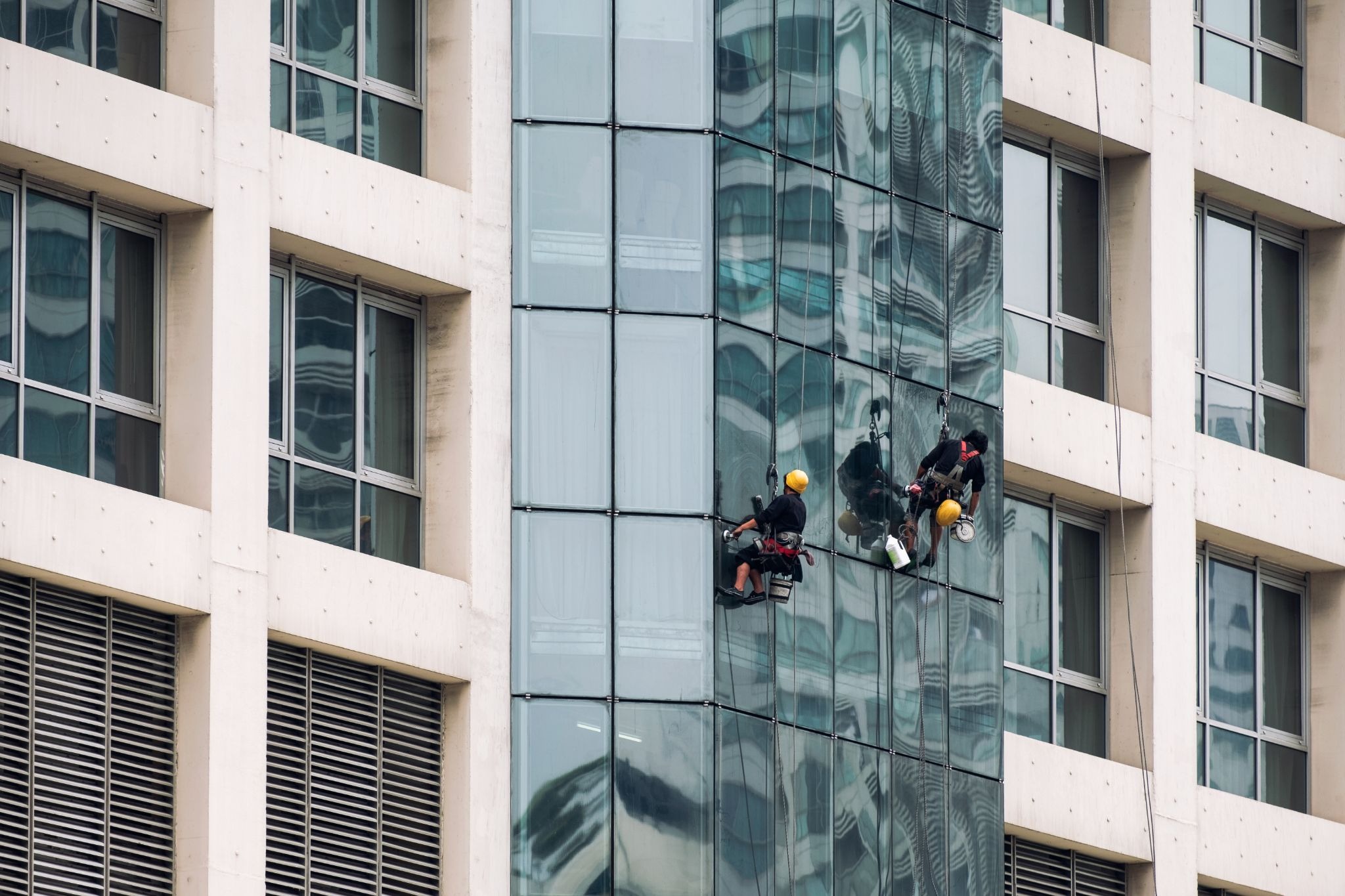
This is the most frequently undertaken curtain wall repair. Failed silicone sealant is removed in full, the joint substrate is cleaned and primed, and new sealant is applied to manufacturer specification. High-rise and mid-rise buildings require rope access for this work. Partial repointing should be avoided: replacing only the most visibly deteriorated sections whilst leaving adjacent degraded sealant will result in continued water ingress and an early return visit.
Individual failed or broken glass units can be replaced within the existing curtain wall frame. Rope access is used for units above safe ladder height, allowing the work to be carried out without scaffolding. For large-scale high level glass replacements across a facade, a programme approach is typically more cost-effective than reactive replacements.
EPDM and neoprene gaskets compress and harden over time. Once they lose their elasticity, they no longer form a watertight seal. Gasket replacement is carried out alongside sealant work as part of a comprehensive curtain wall maintenance programme.
Blocked drainage channels allow water to pond within the frame, accelerating corrosion and increasing the risk of ingress. As part of any curtain wall repair, drainage weep holes and channels should be cleared, checked, and restored where they have been inadvertently sealed during previous works.
Where the aluminium frame has suffered significant distortion or corrosion, frame repair or section replacement may be required. This is more involved than sealant or glazing work and may form part of a wider curtain wall refurbishment rather than a standalone repair.
There is a point at which the cumulative cost of repeated curtain wall repairs exceeds the cost of planned refurbishment. This threshold varies depending on the age of the system, the extent of the deterioration, and the building's long-term use requirements.
GLRE's approach to this question is set out in our refurbish or replace guidance. A condition survey will clarify which route represents better long-term value.
Access is a primary consideration in any curtain wall repair programme. The chosen method will affect cost, programme duration, and disruption to building occupants.
Rope access is the preferred method for the majority of commercial curtain wall repair work on multi-storey buildings. Compared to scaffolding, rope access involves significantly lower setup costs, shorter mobilisation periods, and minimal disruption to the building envelope and occupants below. GLRE's rope access operatives are IRATA-qualified, meaning they are trained and assessed to the industry standard for industrial rope access work.
Scaffolding may be required where the scope of work is extensive and requires sustained access across the full facade, or where the building configuration does not permit rope access. For isolated repairs, mobile elevated work platforms (MEWPs) can be used for lower-level work.
The duration of curtain wall repair work is dependent on the scope, the access method, and the extent of any glazing replacements required. A localised sealant repair on a single elevation using rope access can typically be completed within a day or two. A full facade repointing programme on a multi-storey commercial building will be planned in phases over several weeks.
An accurate programme is only possible following a condition survey, which provides the scope of works needed to prepare a method statement and access plan.
Curtain wall repair should only be undertaken by contractors with demonstrable experience in commercial glazing and, for high-level work, IRATA-qualified rope access operatives. The complexity of curtain wall systems and the safety requirements at height mean that this is not a task suited to general building maintenance contractors.
GLRE has been a specialist in commercial glazing repair and refurbishment since 1996. Our engineers have worked on curtain wall systems across a wide range of building types, from office buildings and retail centres to airports and transport hubs, healthcare facilities, and educational buildings. Our accreditations, case studies, and in-house engineering capability reflect a depth of experience that is directly relevant to complex curtain wall projects.
We hold accreditations including CHAS, Constructionline, and SSIP, and operate a structured quality management process from initial survey through to post-completion sign-off.
Curtain wall systems installed and repaired in the UK are subject to building regulations and British Standards, including BS 8000-7 for workmanship on glazed curtain walling. The Glass and Glazing Federation (GGF) publishes guidance on glazing standards and best practice. For buildings subject to the Building Safety Act 2022, facade maintenance and repair work may also trigger additional notification and documentation requirements under the higher-risk buildings regime.
Where a building is a listed structure, consent may be required before repairs that alter the external appearance. GLRE has experience working on listed and heritage buildings and can advise on the constraints applicable to specific projects.
If your building has signs of curtain wall failure, GLRE can carry out a full glazing inspection and provide a prioritised repair specification. Contact our projects team to arrange a site survey.

Refurb House,
11 Minton Enterprise Park,
Oaks Drive,
Newmarket,
CB8 7YY


.webp)