What is emergency make safe glazing and how does it work? GLRE explains the process, temporary measures and what facilities managers should look for. Contact us today.
Back To Blog.jpg)
An emergency make safe is the immediate response to a glazing failure on a commercial building. It involves removing broken or displaced glass, securing the affected opening with temporary boarding and weatherproofing, and inspecting the surrounding glazed elements to confirm no further risk exists. The purpose is to eliminate danger to building occupants and the public as quickly as possible, while preserving the integrity of the building envelope until a permanent replacement can be completed.
For facilities managers responsible for commercial properties, understanding how the emergency make safe process works, what it covers, and how to appoint the right contractor is essential knowledge, particularly when managing buildings with high level glazing or complex facades.
An emergency make safe is a controlled, reactive operation carried out in response to an unplanned glazing failure. Unlike a planned replacement, it does not aim to restore the glazing to its finished specification on the day. Instead, the priority is to eliminate the immediate hazard, make the building weather-tight, and document exactly what is needed for the permanent repair.
Commercial glazing emergencies differ from domestic situations in their complexity. High level failures, curtain wall glazing incidents, and overhead glazing failures all present elevated risks and require specialist access equipment and qualified operatives, not a general glazier.
Glazing failures on commercial buildings can have a range of causes. The most common include:
In high level and overhead glazing situations, any one of these failures creates an immediate public safety risk. Commercial safety netting and debris containment systems can provide a secondary layer of protection in buildings where glazing failure is a known risk, but once a failure occurs, a make safe response is required without delay.
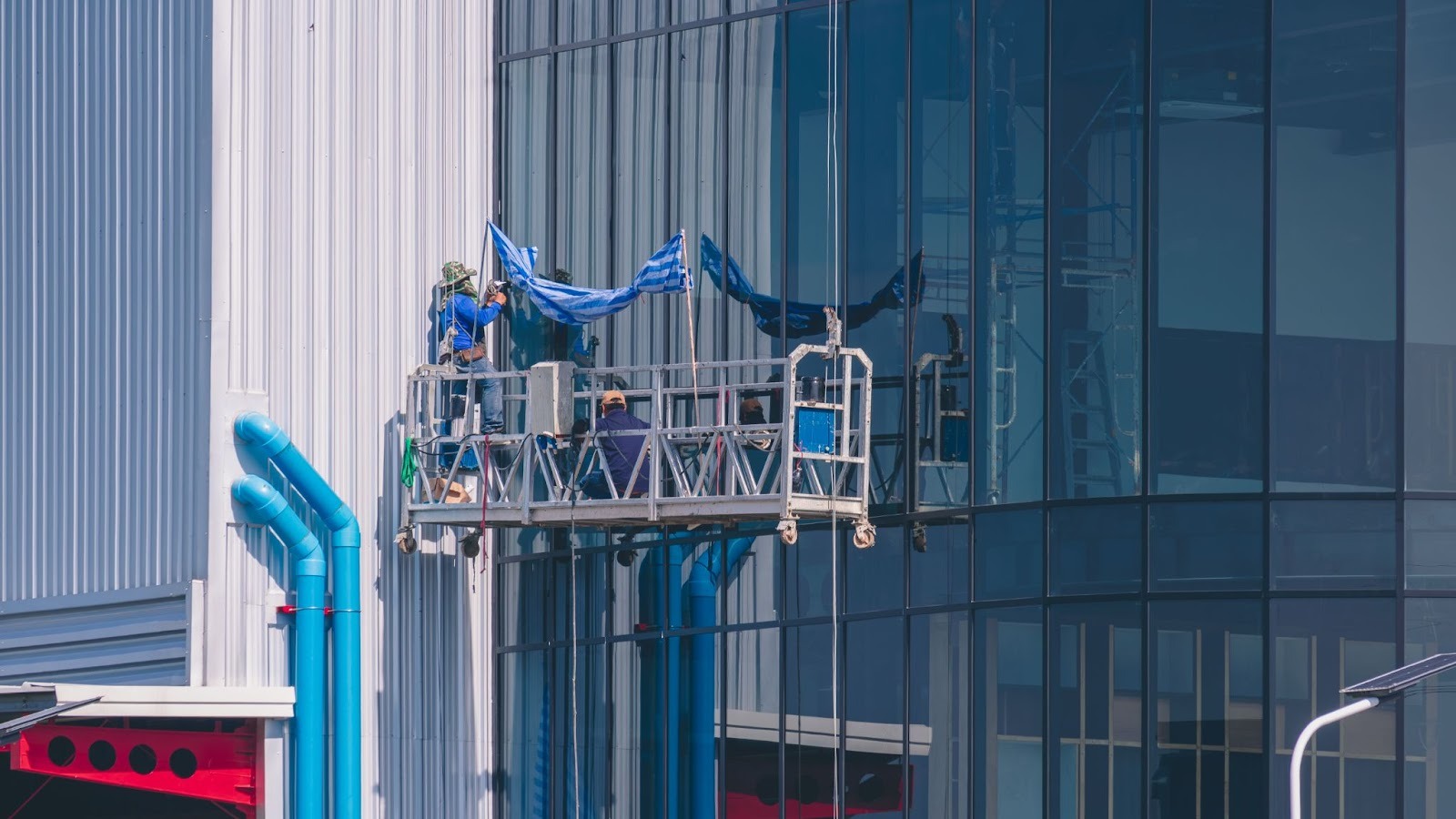
The temporary measures installed during an emergency make safe must be both structurally secure and weather-tight. The appropriate solution will depend on the size and location of the opening, the nature of the building, and whether the area needs to remain occupied or in operation.
Rigid boarding is the most common temporary measure for ground-level or low-level openings. It provides security against unauthorised access and weather protection while the permanent replacement is arranged. The material specification and fixing method will depend on the framing system involved and the size of the opening.
For larger openings or where boarding alone is insufficient, additional weatherproofing materials are applied to the perimeter of the opening to prevent water ingress. This is particularly important where the failure has occurred to a sealed unit within a curtain wall or structural silicone glazing system, where the surrounding frame may also have been compromised.
In some circumstances, particularly where a cracked but intact unit presents a risk of imminent failure, high-performance glazing film can be applied as a temporary measure to hold the glass in place, prevent fragmentation, and allow the building to continue operating safely until the unit can be replaced.
For failures involving high level glazing or overhead applications, temporary safety netting may be deployed beneath the affected area to catch any further glass fragments while the make safe operation is in progress or while the permanent replacement is being procured.
The access method used will depend on the height and location of the failed glazing. GLRE maintains dedicated rope access teams and mechanical access equipment on standby throughout the UK, available seven days a week, to respond to commercial glazing emergencies at any height.
Rope access is frequently the preferred method for high level emergencies because it can be mobilised quickly without the lead time associated with scaffolding. For ground or low-level work, mobile elevated work platforms (MEWPs) or standard access equipment may be used depending on site conditions.
Choosing a contractor that holds current IRATA certification for its rope access operatives is important in emergency situations. Working at height under emergency conditions carries heightened risk, and the training and competency of the operatives involved directly affects the safety of the operation.
Speed of response is a critical factor in emergency make safe situations, particularly where the failure has created a public safety risk or left the building open to the elements. In cases involving high level glass or overhead glazing, the area below the failure should be isolated immediately and the make safe contractor contacted without delay.
GLRE operates a seven-days-a-week response service across its network of regional offices, covering the full United Kingdom. For clients with ongoing reactive requirements, tailored service level agreements (SLAs) are available that specify guaranteed response times from initial call to site attendance, giving facilities managers the certainty they need when managing emergency and reactive glazing across a portfolio of buildings.
Once the make safe is complete and the technical report has been issued, the next stage is to procure and programme the permanent replacement. The information contained in the technical report is designed to make this process as straightforward as possible, providing the glazing contractor with everything they need to specify the replacement unit accurately.
Depending on the glass type involved, lead times for replacement units can vary. Specialist body-tinted, coated, or large-format glass units may take longer to procure than standard clear float glass. The commercial glazing contractor completing the make safe should be able to advise on realistic timescales and manage the replacement programme on your behalf.
In the interim, the condition of the temporary measures should be monitored, particularly following severe weather. If any deterioration is identified, this should be reported to the contractor immediately so that the temporary protection can be reviewed or reinforced.
Appointing the right contractor for emergency make safe work is not a decision that can always wait. Having a pre-approved specialist on your approved supplier list before an incident occurs is the best way to ensure a rapid and competent response. When evaluating contractors, the following factors are worth considering:
GLRE hold CHAS Elite and Constructionline Platinum accreditations and operate from eight regional offices across the UK, supporting clients across sectors including healthcare, rail transport, air transport, and commercial buildings throughout the United Kingdom.
Yes, and the distinction matters. A make safe is a temporary intervention designed to eliminate an immediate hazard and secure the building. A permanent repair or replacement is a planned, fully specified works programme that restores the glazing to its original or improved specification.
Attempting to complete a permanent commercial window replacement without the correct glass specification, access planning, and programming can result in substandard work, extended lead times, or further damage to the surrounding system. The make safe and subsequent technical report are the foundation for a permanent repair that is completed correctly and to specification.
For planned glazing inspections and proactive maintenance programmes, the risk of emergency failures can be reduced, though not entirely eliminated. A structured inspection regime gives facilities managers an early warning of deteriorating gaskets, failing seals, and units showing signs of thermal stress before they result in a failure.
If you need an emergency make safe glazing response or would like to discuss a reactive glazing contract for your property portfolio, contact the GLRE team today and we will arrange attendance at the earliest opportunity.

Refurb House,
11 Minton Enterprise Park,
Oaks Drive,
Newmarket,
CB8 7YY


.webp)